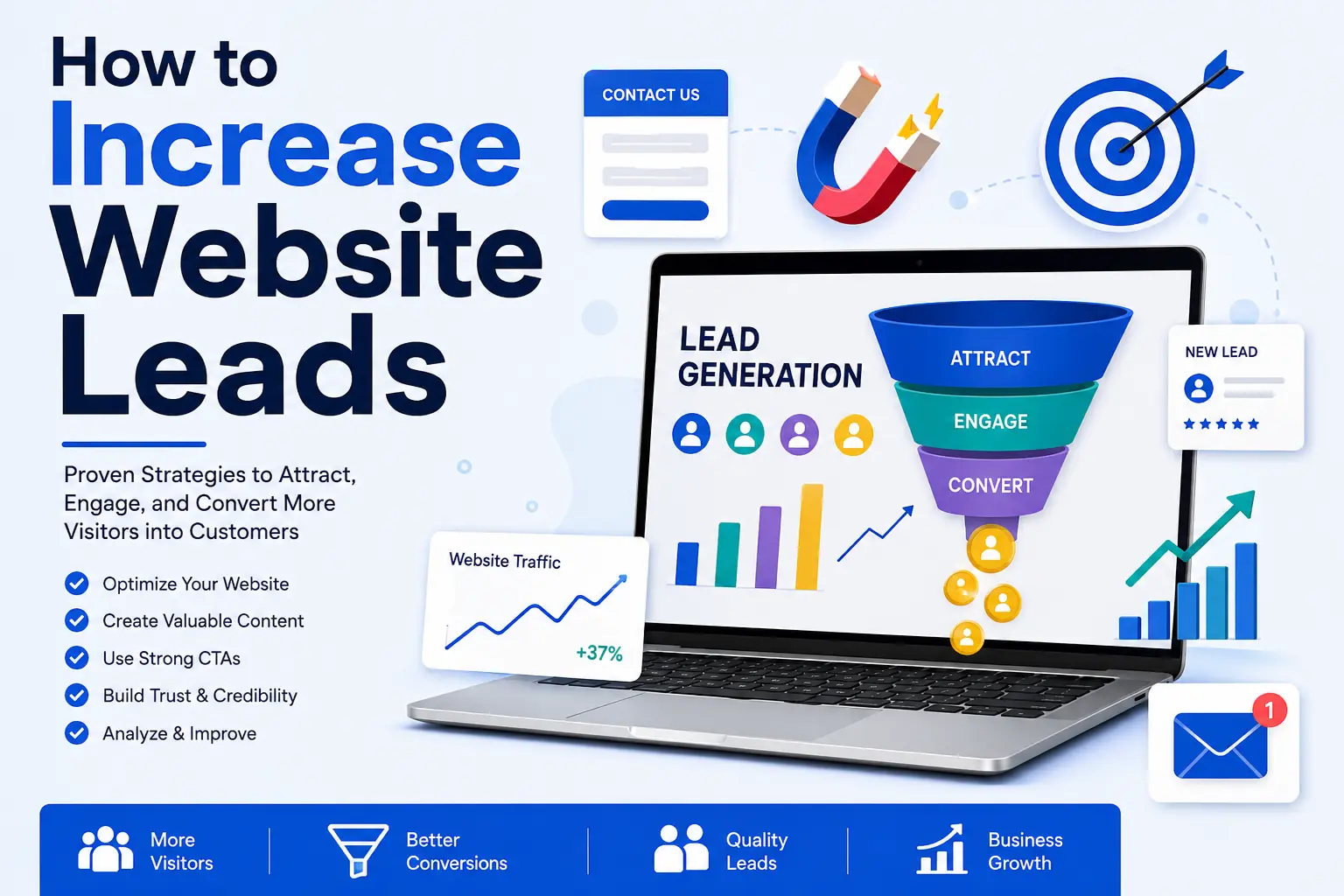
How to Increase Website Leads: A Complete Guide
Introduction
A website is one of the most powerful tools for attracting customers and growing a business. However, many businesses struggle because their websites receive traffic but fail to generate inquiries, calls, or sales. Understanding how to increase website leads is essential for turning visitors into potential customers.
Generating leads is not just about bringing people to your website. It is about creating a user experience that encourages visitors to take action. Whether your goal is to receive phone calls, form submissions, or product inquiries, every element of your website should support conversions.
Businesses that understand how to increase website leads often focus on improving website design, content quality, loading speed, trust signals, and calls to action. By combining these factors, companies can significantly improve their lead generation results.
In this guide, we will explain proven strategies that can help you increase website leads and maximize the return on your digital marketing efforts.
Understanding Why Website Leads Matter
Website leads are potential customers who show interest in your products or services. They may contact you through a form, call your business, subscribe to your newsletter, or request a quote. Leads are important because they represent opportunities for future sales. A website without leads is simply an online brochure. Businesses that understand how to increase website leads can convert website traffic into actual revenue. Some benefits of generating more website leads include:
- ✅ Increased sales opportunities.
- ✅ Better return on marketing investment.
- ✅ Higher conversion rates.
- ✅ Long-term business growth.
- ✅ Improved customer acquisition.
Lead generation helps businesses build relationships with customers before making a sale. This is why companies invest heavily in website optimization and conversion strategies.
Why Lead Generation Matters
Lead generation is one of the most important aspects of digital marketing. Without leads, businesses cannot grow consistently. Understanding how to increase website leads allows businesses to:
Build a Strong Sales Pipeline
More qualified leads create more opportunities for future sales.
Improve Marketing Performance
When your website generates leads effectively, every marketing campaign becomes more profitable.
Increase Customer Engagement
Lead generation encourages communication between businesses and customers.
Create Long-Term Growth
Businesses with a consistent lead generation strategy are more likely to experience sustainable growth.
The Difference Between Traffic and Conversions
Many website owners believe that higher traffic automatically leads to more customers. However, this is not always true. Traffic refers to the number of visitors coming to your website, while conversions represent visitors who take a desired action. Examples of conversions include:
Learning how to increase website leads means focusing on conversions rather than traffic alone. For example:
| Metric | Website A | Website B |
|---|---|---|
| Visitors | 10,000 | 2,000 |
| Leads | 20 | 80 |
Website B generates more leads despite receiving fewer visitors because it has better conversion optimization.
Common Reasons Websites Fail to Generate Leads
Poor Website Design
Visitors often judge a business based on its website appearance. An outdated or cluttered design creates a negative impression and reduces trust.
Slow Loading Speed
Users expect websites to load quickly. A slow website can increase bounce rates and reduce conversions.
Weak Content
Content that does not answer customer questions or solve problems often fails to convert visitors.
No Clear Call to Action
Visitors should understand what action to take next. Without strong CTAs, businesses struggle to increase leads.
Lack of Trust Signals
Customers want proof before contacting a business. Examples include:
Importance of User Experience
User experience plays a major role in lead generation. A website that is easy to navigate encourages visitors to stay longer and interact with your business.
Improving user experience is one of the most effective ways to understand how to increase website leads and improve conversion rates.
Building Trust and Credibility
People prefer doing business with brands they trust. Trust is one of the biggest factors influencing website conversions.
Customer Testimonials
Positive reviews increase confidence and encourage inquiries.
Case Studies
Showing real results helps demonstrate expertise.
Professional Design
A clean and modern website improves credibility.
Secure Website
HTTPS encryption helps users feel safe.
Transparent Contact Information
Displaying phone numbers, email addresses, and physical locations creates trust.
Businesses that focus on trust often discover easier ways to increase website leads and improve customer relationships.
Mobile Optimization Matters More Than Ever
Today, most users browse websites through smartphones and tablets. If your website is not mobile-friendly, you are losing potential customers every day. Businesses that understand how to increase website leads focus heavily on mobile optimization because Google also prioritizes mobile-first indexing.
Benefits of Mobile Optimization
Ways to Improve Mobile Performance
Use Responsive Design
Your website should automatically adjust to different screen sizes.
Optimize Images
Compressed images improve loading speed without reducing quality.
Keep Navigation Simple
Visitors should easily find important pages and contact information.
Use Click-to-Call Buttons
Mobile users prefer calling businesses directly instead of filling out long forms.
Mobile-friendly websites generally perform better when it comes to understanding how to increase website leads and improving customer engagement.
Weak Calls to Action Can Hurt Conversions
Many websites receive traffic but fail to convert visitors because they lack strong calls to action. A call to action (CTA) tells users what they should do next. Examples include:
Learning how to increase website leads requires creating clear and compelling CTAs throughout your website.
Characteristics of Effective Calls to Action
Use Action-Oriented Language
Strong action words encourage visitors to take immediate action.
Create Urgency
Limited-time offers can increase conversion rates.
Make Buttons Visible
CTA buttons should stand out and be easy to locate.
Reduce Friction
Simple forms and direct contact options improve conversions.
Create High-Quality Content That Solves Problems
Content is one of the most powerful tools for lead generation. People visit websites because they are looking for solutions. Businesses that know how to increase website leads consistently publish useful and informative content.
Why Content Marketing Matters
High-quality content:
Focus on User Intent
Answer the questions your audience is searching for. For example:
Providing valuable answers increases credibility and encourages users to contact your business.
SEO Strategies to Increase Website Leads
Search engine optimization is essential for attracting targeted traffic. Understanding how to increase website leads through SEO can provide long-term growth and sustainable results.
Keyword Research
- • Primary keywords.
- • Long-tail keywords.
- • Local keywords.
- • Question-based keywords.
On-Page SEO
- • Title tags.
- • Meta descriptions.
- • Headers.
- • Images.
- • Internal links.
Content Optimization
- • Write comprehensive articles.
- • Focus on user intent.
- • Improve reader engagement.
- • Keep content updated.
Technical SEO
- • Website speed.
- • Mobile responsiveness.
- • XML sitemaps.
- • Structured data.
- • Secure HTTPS connections.
Importance of Landing Pages
Landing pages are specifically designed to convert visitors into leads. Unlike regular pages, landing pages focus on a single objective. Businesses that understand how to increase website leads often create dedicated landing pages for different services.
Effective Landing Page Elements
Strong Headline
Grab attention immediately.
Clear Value Proposition
Explain why visitors should choose your services.
Simple Forms
Avoid asking for unnecessary information.
Powerful Call to Action
Guide visitors toward the next step.
Trust Signals
- ✅ Testimonials.
- ✅ Reviews.
- ✅ Certifications.
- ✅ Case studies.
Lead Capture Forms
Forms are essential for collecting customer information. However, complicated forms often reduce conversion rates.
Best Practices for Forms
Keep Forms Short
Ask only for essential details. Examples:
- 🔹 Name
- 🔹 Phone Number
- 🔹 Email Address
Use Clear Labels
Visitors should understand what information is required.
Reduce Distractions
Focus attention on completing the form.
Enable Mobile-Friendly Forms
Ensure forms work perfectly on all devices.
Businesses seeking how to increase website leads should regularly test and improve their forms.
Using Social Proof to Build Confidence
Customers trust other customers. Social proof increases credibility and influences purchasing decisions.
Types of Social Proof
Customer Reviews
Positive reviews encourage potential customers to contact your business.
Testimonials
Success stories demonstrate expertise.
Case Studies
Real-world results help establish authority.
Portfolio Samples
Showing previous work builds confidence.
Industry Certifications
Professional credentials increase trust.
Social proof plays a major role in learning how to increase website leads because trust directly impacts conversions.
Website Speed Optimization
Speed affects both user experience and search rankings. Even a few seconds of delay can increase bounce rates and reduce conversions.
Improve Website Speed By:
Compressing Images
Large images slow down websites.
Using Caching
Caching improves loading times.
Choosing Reliable Hosting
Quality hosting provides better performance.
Reducing Unnecessary Plugins
Too many plugins can affect website speed.
Using Content Delivery Networks
CDNs improve website accessibility worldwide.
Fast websites create better experiences and help businesses understand how to increase website leads more effectively.
Internal Linking Strategy
Internal links help visitors discover related content and improve SEO performance.
Benefits of Internal Linking
- ✅ Improves website navigation.
- ✅ Reduces bounce rates.
- ✅ Distributes page authority.
- ✅ Encourages visitors to explore more pages.
Examples of Internal Links
- 🔹 Service pages.
- 🔹 Blog posts.
- 🔹 Contact page.
- 🔹 Portfolio page.
- 🔹 About page.
Strong internal linking supports both SEO and lead generation.
Local SEO Can Generate Qualified Leads
Local SEO helps businesses attract nearby customers. For service-based businesses, local traffic often converts better than general traffic. Businesses looking for how to increase website leads should prioritize local SEO strategies.
Optimize Google Business Profile
Maintain accurate information:
- • Business name.
- • Phone number.
- • Address.
- • Website.
- • Operating hours.
Use Location-Based Keywords
Examples:
- • Website Design Services in Dehradun.
- • SEO Company in Delhi.
- • Digital Marketing Agency in Jaipur.
Encourage Reviews
Positive reviews improve trust and visibility.
Create Location Pages
Dedicated pages for different cities improve local rankings.
Blogging Strategy for Lead Generation
Regular blogging helps businesses attract organic traffic and establish authority.
Benefits of Blogging
- ✅ Increases website visibility.
- ✅ Builds trust.
- ✅ Generates backlinks.
- ✅ Supports SEO.
- ✅ Improves engagement.
Write articles that answer customer questions and provide practical solutions.
Consistent blogging is one of the most effective ways to understand how to increase website leads while strengthening your online presence.
Email Marketing Still Delivers Results
Email marketing remains one of the highest ROI digital marketing channels.
Benefits of Email Marketing
- 🔹 Builds relationships.
- 🔹 Nurtures leads.
- 🔹 Promotes services.
- 🔹 Encourages repeat business.
Email Content Ideas
- 🔹 Industry tips.
- 🔹 Special offers.
- 🔹 New blog posts.
- 🔹 Case studies.
- 🔹 Success stories.
Well-planned email campaigns support businesses that want to learn how to increase website leads through long-term customer engagement.
Optimize Your Google Business Profile
Google Business Profile is a powerful tool for generating local inquiries.
Important Optimization Steps
- ✅ Add high-quality photos.
- ✅ Update contact information.
- ✅ Publish regular posts.
- ✅ Respond to customer reviews.
- ✅ Select the correct categories.
An optimized profile can significantly improve visibility and drive qualified traffic to your website.
Conversion Rate Optimization
Conversion rate optimization focuses on turning visitors into customers.
Test Different Elements
Experiment with:
- 🔹 Headlines. 🔹 Images. 🔹 Buttons. 🔹 Forms. 🔹 Layouts.
Analyze User Behavior
Understand:
- 🔹 Where visitors leave. 🔹 Which pages perform best. 🔹 What encourages conversions.
Businesses serious about learning how to increase website leads continuously optimize their websites based on data and user behavior.
Improve User Engagement
Engaged visitors are more likely to become customers.
Ways to Increase Engagement
Add Frequently Asked Questions
FAQs provide valuable information and reduce customer hesitation.
Use Videos
Videos explain products and services effectively.
Publish Case Studies
Real examples build credibility.
Create Interactive Elements
Calculators, quizzes, and comparison tools improve engagement.
Provide Valuable Resources
Guides, ebooks, and checklists encourage users to spend more time on your website.
Higher engagement often leads to higher conversion rates and better lead generation performance.
Importance of Analytics and Tracking
Many businesses focus on attracting visitors but fail to understand what users are actually doing on their websites. Data analysis helps businesses make informed decisions and continuously improve performance. Companies trying to understand how to increase website leads should always rely on analytics rather than assumptions.
Monitoring website performance allows businesses to identify:
By analyzing these metrics regularly, businesses can refine their strategies and improve lead quality over time.
Understand Customer Behavior
Every visitor follows a unique journey before becoming a customer. Understanding this journey helps businesses remove obstacles that prevent conversions. Pay attention to:
User Navigation Patterns
Find out which pages users visit most frequently.
Time Spent on Pages
Longer engagement often indicates valuable content.
Exit Pages
Identifying where users leave can reveal areas needing improvement.
Device Preferences
Knowing whether users browse through mobile or desktop helps optimize experiences accordingly.
Studying customer behavior is an essential step for businesses looking for practical ways regarding how to increase website leads.
Using Google Ads for Faster Lead Generation
Organic traffic takes time to build. Paid advertising can deliver immediate visibility and qualified inquiries. Google Ads allows businesses to target users who are actively searching for products or services.
Advantages of Paid Search Campaigns
Highly Targeted Audience
Ads appear when users search with commercial intent.
Flexible Budget Control
Businesses can start with small budgets and scale gradually.
Immediate Visibility
Unlike SEO, paid campaigns provide quick exposure.
Better Conversion Opportunities
Targeted traffic generally produces higher-quality leads.
Combining SEO and paid advertising creates a balanced strategy for businesses wanting to master how to increase website leads.
Social Media Marketing Can Support Lead Generation
Social media platforms are no longer just branding tools. They have become important channels for attracting potential customers and driving website traffic.
Popular Platforms Include
Each platform serves different audiences and marketing goals.
Content That Encourages Engagement
Educational Posts
Helpful content establishes authority.
Customer Success Stories
Real experiences build trust.
Short Videos
Videos attract attention and improve engagement.
Behind-the-Scenes Content
Authentic content creates stronger relationships.
An active social media presence supports businesses working on how to increase website leads through multiple traffic sources.
Retargeting Can Recover Lost Opportunities
Not every visitor converts during the first visit. In fact, many people need multiple interactions before making a decision. Retargeting helps reconnect with visitors who have previously shown interest.
Benefits of Retargeting Campaigns
Retargeting keeps your business visible and reminds visitors to return when they are ready to take action.
AI and Automation Are Transforming Lead Generation
Technology is changing the way businesses interact with customers. Automation tools can improve efficiency and provide quicker responses.
Areas Where Automation Helps
Email Sequences
Automated emails nurture leads and maintain communication.
Lead Qualification
Businesses can identify serious prospects faster.
Appointment Scheduling
Automation simplifies booking processes.
Customer Follow-Up
Timely responses improve customer experiences.
Companies adopting automation often discover new possibilities regarding how to increase website leads without increasing workload.
Chatbots Improve Response Time
Modern consumers expect quick answers. Chatbots help businesses provide instant assistance even outside working hours.
Benefits of Chatbots
Visitors who receive immediate answers are more likely to stay on the website and eventually become customers.
Offer Something Valuable
People are more willing to share their contact information when they receive value in return. Businesses can offer:
Free Consultation
Professional guidance attracts potential clients.
Ebooks and Guides
Educational resources establish authority.
Checklists
Practical tools provide immediate value.
Templates
Useful templates encourage lead generation.
Providing genuine value strengthens relationships and contributes to efforts aimed at learning how to increase website leads effectively.
Build Long-Term Customer Relationships
Lead generation should not end after receiving an inquiry. Successful businesses focus on building relationships that create repeat customers and referrals.
Ways to Strengthen Relationships
Maintain Consistent Communication
Regular interaction keeps your business memorable.
Deliver Excellent Service
Satisfied customers become brand advocates.
Encourage Feedback
Customer opinions help improve services.
Provide Ongoing Support
Long-term support increases loyalty.
Trust and customer satisfaction are critical components when developing sustainable strategies for how to increase website leads.
Common Mistakes That Reduce Website Leads
Many websites fail because of avoidable mistakes.
Ignoring Mobile Users
A poor mobile experience discourages visitors.
Overcomplicated Navigation
Confusing menus frustrate users.
Excessive Popups
Too many interruptions can increase bounce rates.
Poor Content Quality
Generic content rarely inspires trust.
Slow Website Performance
Visitors expect fast-loading pages.
Lack of Contact Information
Customers prefer businesses that are transparent and easy to reach.
Avoiding these mistakes can significantly improve lead generation performance.
Future Trends in Website Lead Generation
Digital marketing continues to evolve rapidly. Businesses that adapt to changing trends will remain competitive.
Voice Search Optimization
More users are searching through voice assistants.
Personalized Experiences
Customized content improves engagement.
Interactive Content
Calculators, quizzes, and assessments increase user participation.
Video Marketing
Videos continue to dominate online engagement.
Artificial Intelligence
AI-powered solutions enhance customer interactions and automate repetitive tasks.
Staying ahead of these trends will help businesses continuously improve how to increase website leads in the years ahead.
Key Takeaways
Understanding how to increase website leads requires a combination of strategy, optimization, and continuous improvement. Successful lead generation depends on:
- ✅ Creating valuable content.
- ✅ Optimizing user experience.
- ✅ Building trust and credibility.
- ✅ Improving website speed.
- ✅ Using effective calls to action.
- ✅ Leveraging SEO techniques.
- ✅ Utilizing social media marketing.
- ✅ Tracking performance regularly.
- ✅ Nurturing customer relationships.
- ✅ Adapting to new technologies.
Businesses that consistently focus on these areas are more likely to achieve long-term growth and stronger online visibility.
Turning Website Visitors Into Revenue Opportunities
Getting traffic to a website is important, but attracting visitors alone does not guarantee business growth. The real challenge is converting those visitors into potential customers.
Educate to Convert
Today's consumers prefer information over aggressive sales. By sharing valuable insights, you establish trust and help visitors make confident decisions.
Remove Barriers
Confusion is a conversion killer. Simplifying navigation and forms makes the journey smoother, directly impacting your ability to generate leads.
Commit to Consistency
Long-term growth comes from continuous optimization. Refine your content, speed, and user experience regularly to stay competitive.
Build Loyalty
Ultimately, lead generation is about creating value. Transform occasional visitors into loyal customers by solving their problems effectively.
Businesses researching how to increase website leads often focus on traffic numbers, but successful companies pay equal attention to visitor experience. Focusing on quality interactions and customer-focused strategies is the key to turning a simple online presence into a powerful lead generation asset.
Why Consistency Matters in Lead Generation
Many businesses expect immediate results, but sustainable growth requires consistency. Companies that regularly improve their websites, update content, and analyze customer behavior are more likely to succeed.
Strategic Integration
Understanding **How to Increase Website Leads** is not about using one tactic. It involves combining different strategies and refining them over time.
Trust & Value
Businesses that truly understand **How to Increase Website Leads** focus on providing value and building trust.
Smooth Customer Journey
Another important factor in **How to Increase Website Leads** is maintaining a smooth journey—visitors should be able to contact your business without difficulty.
Adaptability
As competition increases, learning **How to Increase Website Leads** through constant adaptation to customer expectations is critical.
Ultimately, businesses that invest time in understanding **How to Increase Website Leads** are better positioned to attract quality prospects and turn them into loyal customers.
Conclusion
Learning how to increase website leads is not about applying a single technique. It requires a combination of user experience, quality content, search engine optimization, trust-building, and conversion-focused design.
A successful website should do more than attract visitors. It should guide people through a meaningful journey that encourages them to take action. Every page, button, image, and piece of content should contribute toward building confidence and creating opportunities.
Businesses that prioritize customer needs, monitor performance, and continuously optimize their websites are far more likely to generate consistent inquiries and sustainable growth.
Ultimately, understanding how to increase website leads is about creating value, solving problems, and delivering experiences that encourage visitors to become loyal customers. Over time, these efforts can transform a website from a simple online presence into a powerful lead generation asset that supports long-term business success.