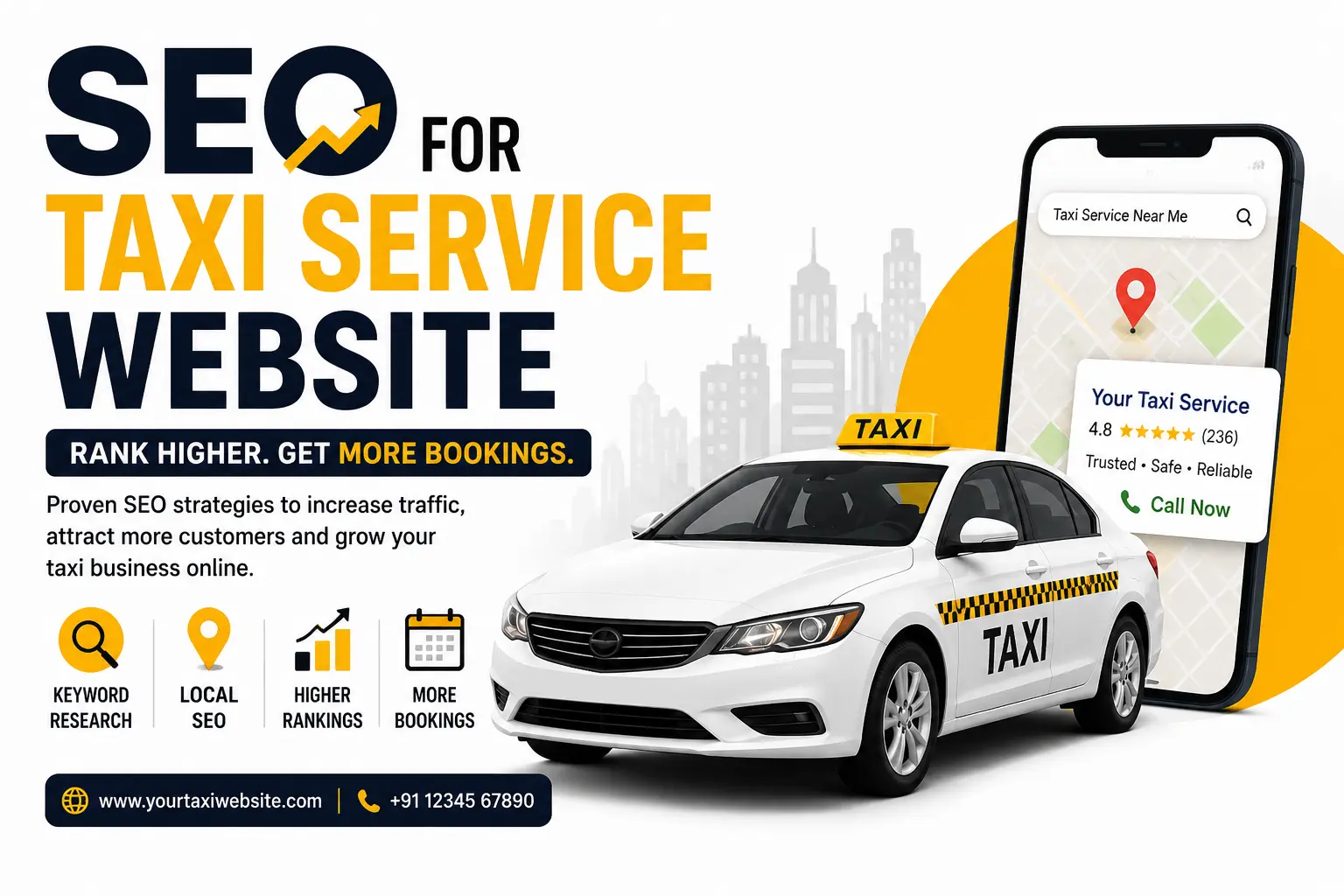
SEO For Taxi Service Website: The Complete Strategy
Introduction
The taxi industry has changed dramatically over the last few years. Travelers no longer depend solely on local references or roadside taxi stands to book transportation. Today, most customers search online before choosing a taxi service, whether they need an airport transfer, outstation cab, corporate transportation, or local sightseeing vehicle.
This shift in customer behavior has made SEO For Taxi Service Website one of the most valuable marketing investments for taxi companies. A well-optimized website can attract potential customers at the exact moment they are searching for transportation services, resulting in more inquiries, phone calls, WhatsApp messages, and direct bookings.
Many taxi business owners invest heavily in Google Ads but ignore search engine optimization. While paid advertising can generate immediate traffic, SEO creates long-term visibility and sustainable lead generation. A taxi website that ranks organically for high-intent keywords can continue attracting customers without paying for every click.
In this guide, you will learn how to build a successful SEO strategy specifically for taxi service websites, improve local search visibility, outrank competitors, and convert website visitors into paying customers.
What is SEO For Taxi Service Website?
SEO For Taxi Service Website is the process of optimizing a taxi company's website so it appears higher in search engine results when customers search for transportation services.
The goal is simple: increase visibility, attract targeted traffic, and generate more bookings. Unlike traditional advertising, SEO focuses on reaching users who are already searching for services such as:
- 👉 Airport Taxi Service
- 👉 Taxi Near Me
- 👉 Outstation Taxi Booking
- 👉 One Way Taxi Service
- 👉 Corporate Taxi Service
- 👉 Luxury Cab Service
- 👉 Local Taxi Service
These searches indicate strong buying intent, making SEO one of the most effective lead-generation channels for taxi businesses.
Why Taxi Businesses Need SEO
Most taxi bookings begin with an online search. When someone lands at an airport, plans a family trip, schedules a business meeting, or books a religious tour, their first action is usually searching Google.
If your website does not appear on the first page, your competitors receive those customers instead. SEO helps taxi businesses:
- Increase Online Visibility Higher rankings mean more people discover your services.
- Generate Qualified Leads SEO targets users actively looking for transportation services.
- Reduce Advertising Dependence Organic traffic continues even when advertising budgets are reduced.
- Build Brand Trust Customers often trust businesses that appear prominently in search results.
- Improve Booking Volume Better visibility naturally leads to more inquiries and confirmed bookings.
Understanding Taxi Customer Search Intent
One of the biggest mistakes taxi website owners make is targeting the wrong keywords. Successful SEO begins by understanding why people search.
Local Intent Searches
Examples: Taxi service in Haridwar, Rishikesh, Delhi, Chandigarh.
These users are looking for transportation within a specific location.
Route-Based Searches
Examples: Delhi to Haridwar Taxi, Delhi to Rishikesh, Chandigarh to Manali, Dehradun to Mussoorie.
These keywords often convert extremely well because the customer already knows their travel route.
Service-Based Searches
Examples: Airport Taxi Service, Outstation Taxi Service, Corporate Cab Service, Tempo Traveller Rental.
These users know exactly what type of transportation they need.
Informational Searches
Examples: Taxi fare from Delhi to Haridwar, Best time to visit Rishikesh, Airport taxi booking tips.
These searches create opportunities for blog content and organic traffic growth.
Keyword Research for Taxi Websites
Effective keyword research forms the foundation of SEO success. Primary keyword categories should include:
Service Keywords
- Taxi Service Website
- Airport Taxi Service
- Outstation Taxi Service
- Cab Booking Service
- Corporate Taxi Service
Location Keywords
- Taxi Service in Delhi
- Taxi Service in Haridwar
- Taxi Service in Rishikesh
- Taxi Service in Dehradun
Route Keywords
- Delhi to Haridwar Taxi
- Delhi to Rishikesh Taxi
- Delhi to Dehradun Taxi
- Chandigarh to Shimla Taxi
Long-Tail Keywords
- Affordable airport taxi service
- Reliable outstation taxi booking
- 24 hour taxi service near me
- Best taxi service for family travel
Long-tail keywords typically have lower competition and higher conversion rates.
Website Structure for Maximum Rankings
Google prefers websites with a clear and organized structure. A taxi website should include separate pages for every major service, location, and travel route.
Essential Service Pages
- Airport Taxi Service
- Local Taxi Service
- Outstation Taxi Service
- Corporate Taxi Service
- One Way Taxi Service
- Luxury Taxi Service
Essential Location Pages
- Taxi Service in Delhi
- Taxi Service in Haridwar
- Taxi Service in Rishikesh
- Taxi Service in Dehradun
- Taxi Service in Chandigarh
Essential Route Pages
- Delhi to Haridwar Taxi
- Delhi to Rishikesh Taxi
- Delhi to Dehradun Taxi
- Chandigarh to Manali Taxi
This structure creates multiple ranking opportunities and improves topical relevance.
Turning Route Pages Into Booking Magnets
Many taxi websites focus only on service pages and city pages, but the biggest opportunity often comes from route-specific content. A traveler searching for "Delhi to Haridwar Taxi" has a completely different intent than someone searching for a general taxi service. The route is already decided, the destination is known, and the booking decision is much closer.
A strong route page should go beyond mentioning the pickup and drop locations. It should explain what travelers can expect during the journey, the type of vehicles available, ideal travel timings, and why the route is popular among customers. This creates a page that is useful for visitors while also helping search engines understand the topic in depth.
Content Optimization Examples
- Delhi to Haridwar: Discuss pilgrimage travel, family trips, weekend travel demand, and direct hotel transfers.
- Chandigarh to Manali: Focus on mountain travel, seasonal tourism, and comfortable transportation for families and groups.
The more relevant information included on the page, the stronger its potential to rank for valuable searches.
Why Most Taxi Websites Struggle to Rank
A common issue in the taxi industry is that many businesses use the same content across multiple pages. One city page looks identical to another except for the city name. Search engines have become increasingly effective at recognizing this pattern.
When every page repeats the same text, it becomes difficult for Google to determine which page deserves visibility. Instead of creating dozens of nearly identical pages, each destination should have its own unique information.
Haridwar Page
Can focus on religious tourism, hotel transfers, and railway station pickups.
Rishikesh Page
Can highlight adventure tourism, yoga retreats, river rafting locations, and local sightseeing transportation.
Dehradun Page
Can discuss airport transfers, educational institutions, and business travel.
Unique information creates unique value, and unique value creates stronger rankings.
Creating Content That Attracts Travelers Before They Book
Most taxi companies only create pages that directly sell services. While service pages are important, many customers begin their journey by searching for travel information.
Someone planning a trip may search for:
- 👉 Best places to visit in Haridwar
- 👉 How to travel from Delhi to Rishikesh
- 👉 Tourist attractions in Dehradun
- 👉 Family trip to Mussoorie
These searches happen before the booking stage. By publishing useful travel content, a taxi website can reach potential customers early and guide them toward a booking later.
A well-written travel guide does more than generate traffic. It establishes trust. When visitors find helpful information on your website, they are more likely to consider your company when transportation is required.
Building Authority Through Local Expertise
Search engines increasingly favor businesses that demonstrate real knowledge and experience. For taxi companies, this means showing expertise about destinations, travel routes, and customer needs.
Instead of publishing generic content, focus on information that only a local transportation provider would know. Discuss the busiest travel seasons, common pickup locations, local events, airport procedures, and practical travel tips.
How to Show Expertise
- Haridwar transportation: Mention major pilgrimage periods when visitor demand increases.
- Rishikesh travel page: Discuss peak rafting seasons and transportation requirements for adventure tourists.
This type of insight strengthens credibility and helps establish topical authority.
The Growing Importance of Mobile Bookings
Taxi customers rarely sit at a desktop computer while searching for transportation. Most bookings begin on smartphones. A traveler arriving at an airport, railway station, hotel, or tourist destination typically uses a mobile device to find transportation options.
Because of this behavior, the mobile experience directly affects SEO performance. Visitors should be able to call, send a WhatsApp message, or submit a booking request within seconds.
Mobile Optimization Essentials
- Navigation should remain simple.
- Contact buttons should remain visible.
- Important information such as vehicle options, destinations, and phone numbers should never be difficult to find.
When mobile users can complete actions quickly, engagement improves. Search engines often interpret these positive interactions as signs of quality.
Earning Trust Before Asking for a Booking
Trust plays a major role in transportation services. Customers are placing their travel plans, family members, schedules, and safety in the hands of a service provider. A taxi website should answer the questions visitors naturally have before making a booking decision, such as:
- ✔️ Are the drivers experienced?
- ✔️ Are vehicles maintained properly?
- ✔️ Is customer support available?
- ✔️ Can the service handle airport pickups?
- ✔️ Is advance booking available?
- ✔️ Are outstation trips supported?
Addressing these concerns through detailed content reduces hesitation. Trust signals can be reinforced through customer testimonials, detailed service explanations, fleet information, and transparent communication.
Strengthening Local Visibility
Many successful taxi websites rank because they cover destinations comprehensively. Build a complete network of destination-focused content rather than relying on a few service pages.
Destination Pages
- Taxi Service in Haridwar
- Taxi Service in Rishikesh
- Taxi Service in Dehradun
- Taxi Service in Mussoorie
Route Pages
- Delhi to Haridwar Taxi
- Delhi to Rishikesh Taxi
- Chandigarh to Shimla Taxi
- Dehradun to Mussoorie Taxi
Measuring SEO Success Beyond Rankings
Many business owners judge SEO only by keyword rankings. Rankings matter, but they are not the ultimate goal. A taxi website should measure success using business-focused metrics such as:
- ✔️ Booking inquiries
- ✔️ Phone calls
- ✔️ WhatsApp conversations
- ✔️ Quote requests
- ✔️ Route-specific leads
- ✔️ Repeat customers
A keyword reaching the first page is valuable only when it contributes to real business growth. The most successful SEO campaigns focus on generating bookings rather than chasing rankings alone.
Why SEO For Taxi Service Website Delivers Long-Term Results
Unlike paid advertising, where traffic stops as soon as the budget runs out, SEO For Taxi Service Website continues to generate visibility and inquiries over time. A properly optimized taxi website can attract potential customers from search engines every day without requiring payment for each click.
One of the biggest advantages of SEO For Taxi Service Website is that it targets users who are already searching for transportation services. Whether someone needs an airport transfer, outstation cab, corporate taxi, or local sightseeing vehicle, search engines connect those users with relevant businesses. This makes SEO one of the most cost-effective marketing strategies available to taxi operators.
As competition increases across the transportation industry, investing in SEO For Taxi Service Website becomes even more important. Companies that consistently improve their content, optimize location pages, and strengthen their online presence often achieve stronger rankings than competitors relying only on advertisements.
Key Strategic Benefits
- Building Trust: Customers associate higher search rankings with reliability and professionalism.
- Brand Visibility: Every optimized route and destination page creates an additional opportunity to rank.
- Sustainable Growth: Treat SEO as an ongoing process to experience continuous increases in inquiries and direct bookings.
As search engines continue rewarding useful content and positive user experiences, the value of SEO For Taxi Service Website is expected to grow even further in the coming years.
How to Build a Winning SEO Strategy
The success of a taxi business online depends on more than just having a website. A structured SEO For Taxi Service Website strategy helps search engines understand the services, locations, and routes a company offers. Without a clear strategy, even well-designed websites can struggle to attract meaningful traffic.
A practical plan starts with identifying the services customers search for most frequently. Airport transfers, local taxi services, outstation cab bookings, corporate transportation, and one-way taxi routes should all have dedicated optimization efforts. This approach helps improve relevance for a wider range of search queries.
Core Pillars of Your Strategy
- ✔️ Content around travel requirements: Create route guides and destination information to build trust.
- ✔️ Local visibility: Ensure every service area has dedicated content rather than a single generic page.
- ✔️ Ongoing optimization: View SEO as an ongoing process to adapt to changing trends and competition.
Businesses that consistently invest in SEO often benefit from increased brand awareness, higher-quality traffic, and a steady flow of booking inquiries, building a sustainable source of leads through organic search.
The Future of SEO For Taxi Service Website in 2026 and Beyond
The transportation industry is becoming increasingly digital. In 2026 and beyond, the future of SEO For Taxi Service Website will be heavily influenced by user experience, local relevance, and search intent. Search engines are no longer ranking websites simply because they contain keywords; instead, they reward businesses that provide accurate information, helpful content, and a seamless booking experience.
Mobile & Speed
Travelers search on the move. Prioritizing speed, usability, and easy booking is a competitive necessity.
AI & Expertise
Search engines now require content that demonstrates real expertise and answers customer questions meaningfully.
Voice & Conversational
As voice search grows, content must address real-world travel needs and conversational queries.
Businesses that invest consistently in SEO today are building a foundation for future growth. The future of SEO for taxi services belongs to businesses that focus on helping customers while maintaining a strong, authoritative online presence.
Common Challenges in SEO For Taxi Service Website
Many taxi businesses invest in a website but fail to achieve meaningful search visibility because they overlook the fundamentals of SEO For Taxi Service Website. One of the biggest challenges is targeting highly competitive keywords without building enough topical authority.
Content Duplication
Maintaining unique content across multiple service locations instead of reusing the same text is critical for rankings.
Increasing Competition
As more businesses invest in SEO, you must create content that offers genuine value rather than just selling.
Local Visibility
Maintaining accurate business info, earning reviews, and strong local signals are essential for showing up in local searches.
Despite these challenges, companies that consistently improve their content, strengthen local relevance, and focus on user experience are more likely to achieve sustainable rankings and long-term booking growth.
Benefits of SEO For Taxi Service Website
A well-planned SEO For Taxi Service Website strategy offers benefits that go far beyond search engine rankings. The primary advantage is the ability to attract potential customers who are actively looking for transportation services. This targeted traffic often converts better than many traditional marketing methods.
Increased Brand Visibility
Consistent appearance in search results for routes and services builds trust, credibility, and brand familiarity.
Long-Term Lead Generation
Unlike paid ads, organic rankings continue generating traffic and inquiries for months or even years.
Scalable Growth
Whether expanding airport transfers or corporate travel, SEO provides a sustainable foundation for business growth.
As content grows and authority increases, the overall impact of SEO For Taxi Service Website becomes even stronger, creating a reliable source of inquiries and direct bookings.
Why Every Taxi Business Needs SEO For Taxi Service Website
In today's competitive transportation market, having a website alone is not enough. Without SEO For Taxi Service Website, even the best taxi companies can struggle to attract online customers. Travelers rely on search engines to find airport transfers, outstation taxis, local cab services, and corporate transportation, making SEO a crucial part of digital growth.
The Competitive Advantage
The biggest advantage of SEO For Taxi Service Website is that it connects businesses with users who already have booking intent. Instead of reaching a general audience, it focuses on attracting people actively searching for transportation solutions. This targeted approach improves lead quality and increases the chances of converting visitors into paying customers.
As customer behavior continues to shift online, investing in SEO For Taxi Service Website is becoming essential for taxi operators that want sustainable growth, stronger visibility, and more direct bookings.
SEO For Taxi Service Website: A Long-Term Investment
Many businesses focus on short-term marketing tactics, but SEO For Taxi Service Website remains one of the most sustainable ways to generate consistent traffic and booking inquiries.
When implemented correctly, SEO For Taxi Service Website helps taxi companies improve online visibility, attract qualified visitors, and build long-term growth without depending entirely on paid advertising.
Key Takeaways
Before investing time and resources into SEO, taxi business owners should understand that long-term success comes from consistency rather than shortcuts. The most effective SEO For Taxi Service Website strategy combines location pages, route pages, local SEO, technical optimization, and helpful content that solves customer problems.
- ✅ A strong SEO For Taxi Service Website strategy helps businesses attract high-intent customers actively searching for transportation services.
- ✅ Consistent SEO For Taxi Service Website efforts can improve search visibility, increase website traffic, and generate more direct bookings over time.
- ✅ SEO For Taxi Service Website helps generate organic bookings without paying for every click.
- ✅ Route-based pages often convert better than generic service pages.
- ✅ Location-specific content improves local search visibility.
- ✅ Google Business Profile plays a major role in generating phone calls and inquiries.
- ✅ Mobile-friendly websites perform better because most taxi bookings happen on smartphones.
- ✅ Unique content gives taxi websites a competitive advantage in search results.
- ✅ Customer reviews improve trust and local rankings.
- ✅ Internal linking helps search engines understand website structure.
- ✅ Consistent content publishing strengthens authority over time.
A well-planned SEO For Taxi Service Website strategy can become a reliable source of long-term business growth.
Conclusion
Investing in SEO For Taxi Service Website is one of the smartest long-term decisions a taxi business can make. Unlike paid advertising, which stops generating traffic when the budget ends, SEO For Taxi Service Website helps build lasting visibility in search results.
By combining location-based content, route-specific pages, local optimization, and a strong user experience, taxi companies can attract highly targeted visitors who are actively searching for transportation services.
The most successful SEO For Taxi Service Website campaigns focus on providing value to travelers while making it easy to book a ride. As competition continues to grow, businesses that prioritize SEO For Taxi Service Website will be better positioned to increase traffic, generate inquiries, and secure more direct bookings from Google.